Spending plans
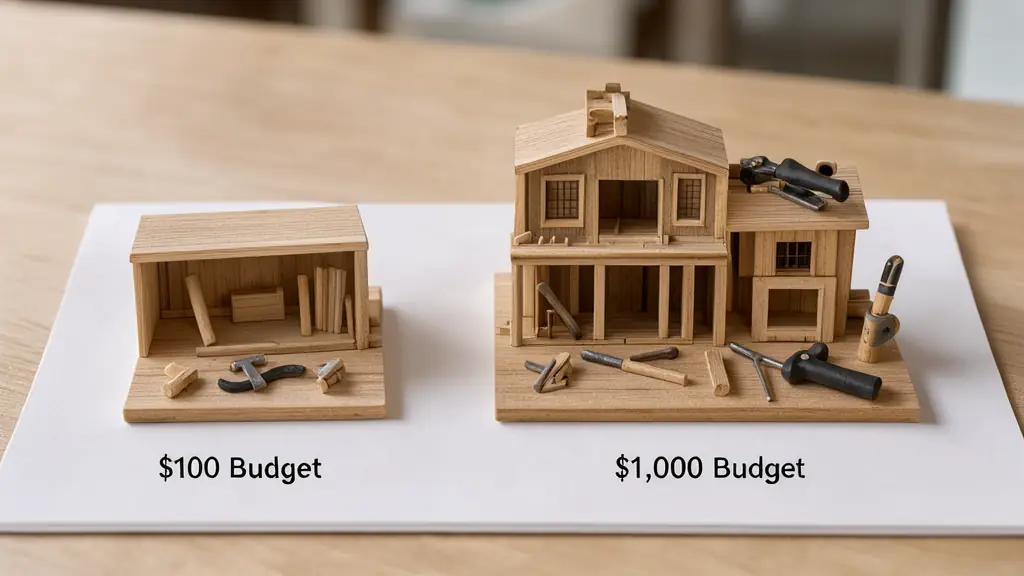
Two budgets for a film review blog: $100 and $1,000
Film sites live on festivals, premieres and awards season. Below, we spend two imaginary budgets on a review blog, and explain what we would skip.
Blogzic editorial team ·
First, what bulk should mean
Take the phrase buy bulk backlinks with care. Fifty identical links in one afternoon is the kind of pattern the March 2024 spam policies target, while eight varied links across eight sites is merely a busy month.
We use the word to mean one basket and several donors. Everything below follows that rule, and everything below is an example with invented numbers, not a record of any real site.
The imaginary blog is called Midnight Reel. It has about 120 reviews, a festival diary and a decent mobile score, and the owner wants more people to find the review archive.
Not sure how an order runs? The order walkthrough covers each click. For the music side of the same thinking, try the album release plan.
The same blog, two budgets
| $100 plan | $1,000 plan | |
|---|---|---|
| Number of links | 6 to 8 | 25 to 35 |
| Typical row price | $8 to $20 | $10 to $60, with two or three above $100 |
| Where they point | Two review pages and the archive | The archive, ten reviews, the festival diary |
| Pace | Two a week for three weeks | Spread over about four months |
| Content mode | Automatic for most, own article for one | Own article for the three strongest |
| Check-in | Search Console after 6 weeks | Monthly, with a note on each order |
What we would do with $100
Small money rewards patience and restraint.
Pick one page that deserves it
The best review you have, or the festival diary. One page, three links, spread across a fortnight.
Hunt the cheaper culture sites
Filter niche for film, entertainment or general culture, and keep the price at or under $15 a row.
Keep $20 in reserve
A surprise premiere or a leaked trailer can make an old review newly relevant. Money held back lets you act while the topic is warm.

How to tell whether the money is working
Give a small budget time before you judge it. One quiet week says little. Search results for a film site move in bursts around festivals and awards, so judge the spend over a full cycle, not a single weekend.
Start with the targeted pages in Search Console. Keep it simple. Look at impressions and average position for the queries each page should earn, and compare the same weeks before and after the order. Keep both windows the same length, or the comparison means very little.
Impressions before clicks
On a young film blog, impressions move first. A page that starts appearing for a few more queries is showing progress, even while the clicks lag behind.
Write down what you expected each page to earn, then check the report against that note. A note made before the order is worth more than a memory made after it.
Give slow growth a fair window
Say your reviews have sat on the second page for months. A new link can take weeks to show up, and the reports that show it lag behind that. Judging too early tells you about the reporting, not about the link.
Keep the comparison honest by reading the same report at the same interval each time. Changing the measure halfway through is the surest way to find the result you wanted.
Mark the date of each order on the same chart you use for the page, so the two line up when you look back. A chart with no dates is only a line.
When the page is the problem
If the target page is slow on a phone or the review is thin, a link cannot make up for it. Fix the page first, then buy links to a page that is worth finding.
Check the page with the plain test a stranger would apply. Does the title say what the film is, does the review say what you think, and does it load before the reader gives up?
A fast, honest page with a clear title often needs no link at all in its first season. That is worth remembering before you spend, because a placement cannot replace the page.
What we would do with $1,000
Bigger money buys range, and range buys safety.
Divide by season
Festivals in September, awards in January, summer blockbusters in July. Reserve a quarter of the budget for each window.
Mix donors on purpose
Some film sites, some wider culture sites, a few local news sites in your own language. A varied mix looks like real coverage.
Spend more on fewer rows
Two or three rows at $60 to $150 can sit beside twenty smaller ones. Choose by traffic and topic fit, not by Domain Rating alone.
Where the money should not go
Skip lists of fifty donors for ten dollars. That is the same bundle the 2012 Penguin update and the December 2022 link spam update taught the industry to distrust.
Skip links to the homepage only. Review pages and the archive are where search visitors want to land, and a mix of targets looks more natural than one URL collecting everything.
Pacing the spend across a year
Spend in windows rather than in one go. A festival window, an awards window and a quiet summer each deserve a small allowance, so the money follows the calendar that film sites actually live on.
Leave a gap between orders so you can read the first result before the second one lands. A few weeks is usually enough to see whether the target page responded, and it keeps the next decision based on something real.

Thin pages waste a budget
A link is a door. It leads somewhere, and a thin page behind it gives a visitor nothing to stay for. A review of three lines and a poster image is a weak target, however good the donor row looks.
Before you order, read the target as a stranger would. If the review would not help someone choosing a film for the evening, the placement is paying for a page that cannot hold its ground.
What a worthy review contains
A review worth linking to has a point of view, a clear rating rule and a summary a stranger can use without spoilers. Those three things give a donor's readers a reason to click, and they give search engines something specific to match.
Write the review in your own voice, even when it is short. A short, honest review does more for a placement than a long one copied from a press kit.
Why mass-made archives are risky
Publishing dozens of brief reviews in one week to make an archive look busy is the pattern the March 2024 policies on scaled content were aimed at. Google's guidance asks whether a page was made for people, and a flood of similar pages answers that question badly.
Fewer reviews, each one checked and dated, make a better target than a crowd of thin ones. Your budget goes further when the page under the link has earned the visit.
Recovering from a manual action
A site hit by a manual action rarely recovers by polishing the wording. Removing or noindexing the pages that caused the problem, then sending an honest reconsideration request through Search Console, is the usual route.
Describe what you removed and what your process is now, in plain terms. Replies can take weeks, and a refusal usually says what is still missing, so read it as a checklist rather than a verdict.
Which budget fits
Start at $100 and earn your way up
Nothing about a film blog requires $1,000 on day one. Run the small plan, check Search Console impressions for the targeted pages after about six weeks, and only then decide whether to scale.
- If impressions rise on the targeted pages, repeat with different pages
- If nothing moves, check content and speed before buying more
- Either way, record the date and URL of each order
Questions film bloggers ask about budgets
Is it safe to buy bulk backlinks for a film blog?
No purchase is safe in the sense of a guarantee. The lower-risk approach is a few varied placements on relevant film and culture sites, paced over months, each pointing at a page you are happy to defend. The same logic applies to music, as the album release plan explains.
How many links does a $100 plan really cover?
The example table in this guide plans six to eight links, but the real count depends on the rows you pick. Prices run from $1 to about $500, so the same budget can cover very different numbers of placements.
Should I spend the whole budget on day one?
Usually not. Spend a slice, watch the targeted pages for a few weeks and keep the rest for the season that follows. Holding money back protects you from a poor first result and lets you act when a festival makes an old review relevant again.
Is an expired domain a cheaper route into film?
It looks cheaper on paper, and the risk comes with it. An old domain rebuilt as an archive, with links aimed at a current site, is the sort of setup that search engines have learned to spot. Spend on a live film site instead.
